
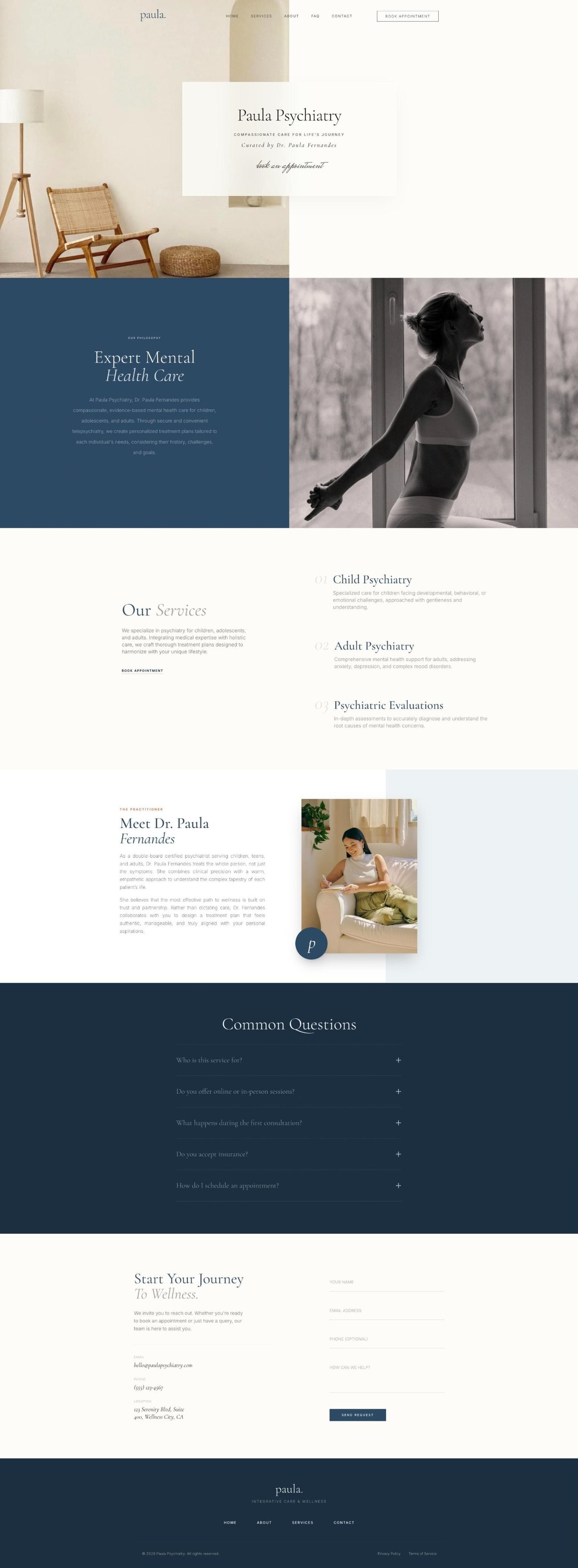
Choosing a therapist takes courage. Many people visit several websites before they reach out, and they often do it late at night, when things feel heavy. Your homepage has a few seconds to tell them they are in the right place.
This is what we recommend saying first.
Who you help, in their words
"Individual therapy" describes a service. "Support for women going through burnout, anxiety or big life changes" describes a person. Write the sentence your ideal client would recognize, using the words they would use, not clinical terms.
How you work, in plain language
Most people do not know the difference between approaches, and they do not need to. Tell them what a session with you feels like: calm, practical, structured, gentle. One or two sentences are enough on the homepage.
The practical details
Online or in person, where you are licensed, how long sessions last, whether you offer a free first call and how fees work. These details answer the silent question "is this even possible for me?" before it becomes a reason to leave.
One gentle next step
For many people, booking a full session feels like too much. A short free consultation call, or simply a form that says "tell me a little about what brings you here", is easier to say yes to. Use the same calm invitation throughout the site.
What to leave out
Long lists of every modality and certification, stock photos of people holding their head in their hands, and urgent language. Your credentials matter, so place them on your about page and keep a short line near the top of the homepage. Everything else can be quieter.
A good therapist homepage feels like the first five minutes of a good session: calm, clear and kind.
Questions therapists ask
Yes, if you are comfortable with it. Choosing a therapist is personal, and seeing your face helps people imagine talking to you.
A few sentences on the homepage is enough. Explain it in everyday words and link to a page with more detail for those who want it.
Keep it short: name, email and how they prefer to be contacted. Avoid asking for personal or health details in the form. That conversation belongs in your first call.