
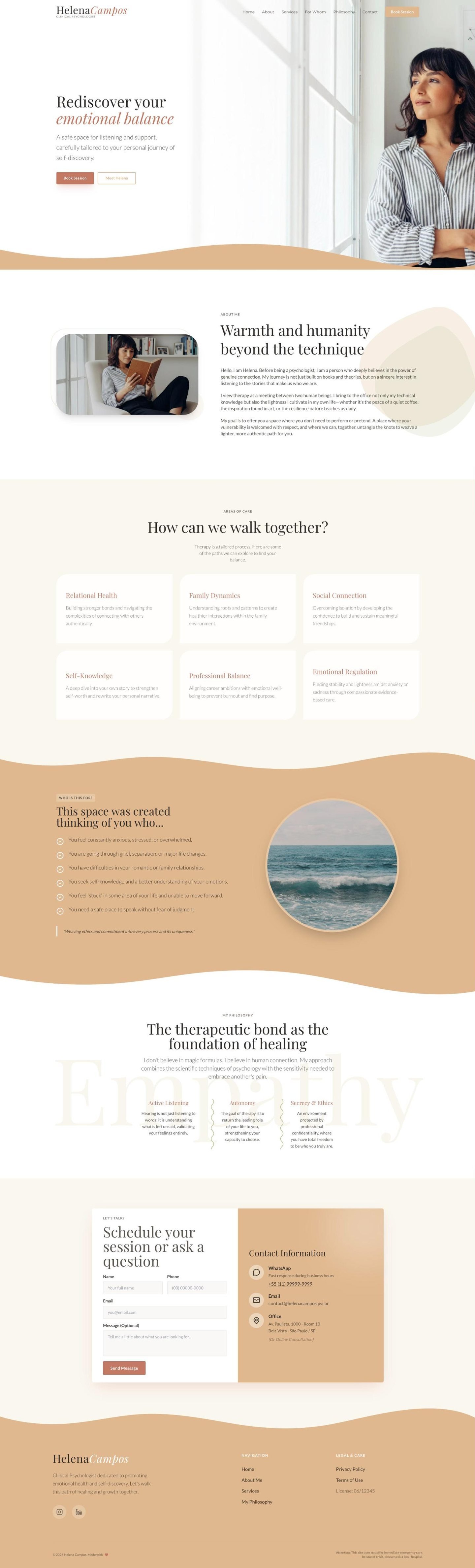
Most guides to marketing for therapists read like a list of everything you could possibly do: social media, ads, podcasts, newsletters, workshops, videos. If you are a therapist who would rather spend your energy on clients, that list is exhausting before you start.
The good news is that most clients reach a private practice through a small number of channels, and none of them requires you to become an influencer. What matters more is doing a few things well and in the right order, so each step makes the next one work better.
Here is the order we suggest to the therapists we work with, and what we tell them they can safely leave for later.
Name who you help, in one sentence
Every other step depends on this one. Your website, your directory profile and the way other professionals describe you all work better when you can say, in one plain sentence, who you help and with what. "I work with adults with anxiety" is hard to remember. "I help new mothers who feel overwhelmed and alone" is easy to repeat, and easy to refer.
This does not mean you must turn away everyone else. It means the first thing people read is specific enough that the right person thinks "this is for me." Write the sentence in your client's words, not clinical terms, and use the same sentence everywhere.
Build a website that answers the questions people ask
Almost every path to you ends on your website. Someone sees your directory profile, hears your name from their doctor or finds you on Google, and then they look you up before they reach out. If the site is vague, slow or hard to read on a phone, many will close it and try the next name.
A therapist website does not need to be big. It needs to answer the questions people ask before they contact anyone: who you help, how you work, whether you see clients online or in person, what sessions cost or whether you take insurance, and how to book a first call. We go through each page in our guide to what to include on a therapist website.
If you work with a few different groups, separate pages for each specialty help twice: visitors feel understood, and Google can show each page to people searching for that kind of support. That is why we usually suggest a multi-page website once a practice has two or three clear specialties.
Marketing brings people to your door. Your website is what helps them knock.
Keep one strong directory profile
Therapy directories are often the fastest way for a new practice to get its first inquiries. Psychology Today is one of the best known in the US, and a listing there costs a flat $29.95 a month, according to SoftwarePundit's review of the directory. In that same review, which surveyed 20 therapists, half of those who gave details said Psychology Today brings them more than half of their referrals, while others said results vary from month to month or are weak in crowded areas.
So treat a directory as a strong start, not a whole plan. Write your profile the way you would talk to one client, use a warm, recent photo, and link to your website so people can learn more. One complete, well written profile usually does more than five half finished ones.
Show up when people search near you
Many people search "therapist near me" or "anxiety therapist" plus their city. Two free things help you appear in those results. The first is a Google Business Profile, the listing that shows your practice on Google Maps and in local results. The second is a website that clearly names the city or state where you practice, on the homepage and on your contact page.
Keep your practice name, address or service area, and phone number exactly the same everywhere they appear. If you see clients only online, say which states you are licensed in, since that is what your visitors need to know first. Every Delas site includes this basic search setup, so Google can understand what you do and where.
Build relationships with people who refer
Referrals from other professionals are slower to build than any online channel, but they tend to last. Think of the people who already meet your future clients: family doctors, psychiatrists, OB GYNs, school counselors, nutritionists, other therapists whose waitlists are full or who do not treat what you treat.
You do not need a pitch. A short, friendly email explaining who you help, with a link to your website, is enough to start. Then stay in touch a few times a year and refer back when it makes sense. When they pass your name on, the person will look you up, which is one more reason the website matters.
What you can leave for later
Some channels are worth it only after the basics are in place, and a few need extra care for therapists.
- Paid ads. Google and social media ads can work, but they send people to your website. If the site does not explain clearly who you help, you pay for visits that do not turn into calls.
- Posting every day. Social media helps some therapists build trust, especially those who enjoy writing or speaking. It is optional. A clear website and directory profile do more for most practices.
- Testimonials and reviews. Check your code of ethics first. The APA Ethics Code says psychologists do not solicit testimonials from current therapy clients or from others who may be vulnerable to undue influence, and many counseling and social work codes are similar.
- Approaching people directly. The same APA code says psychologists do not engage in uninvited in-person solicitation of business from potential clients who are vulnerable to undue influence. Marketing for therapists works best when it lets people come to you.
How to tell what is working
Add one simple question to your first call or intake: "How did you find me?" Write the answer down each time. After a few months you will see which channels bring the people you most want to work with, and you can put your time there.
Also notice where people drop off. If many visitors reach your site but few contact you, the problem is usually the site: an unclear first line, missing fees, or a contact form that asks too much. If you would like a second pair of eyes on yours, contact us or look at our portfolio to see how we design for therapists.
Questions therapists ask about marketing
Once the basics are set up, an hour or two a week is enough for most solo practices. Most of that time goes to keeping your profiles current and staying in touch with people who refer to you.
No. Social media can help if you enjoy it, but it is not where most therapy clients start their search. A clear website and directory profile do more for most practices.
Leave ads for later. They work best when your website already explains who you help and makes it easy to reach out, otherwise you pay for visits that do not turn into calls.
Check your professional code first. The APA Ethics Code, for example, says psychologists do not solicit testimonials from current therapy clients, and many other codes are similar.
A website that does the quiet work of marketing for you.
Every Delas site includes basic search setup.
See the options