
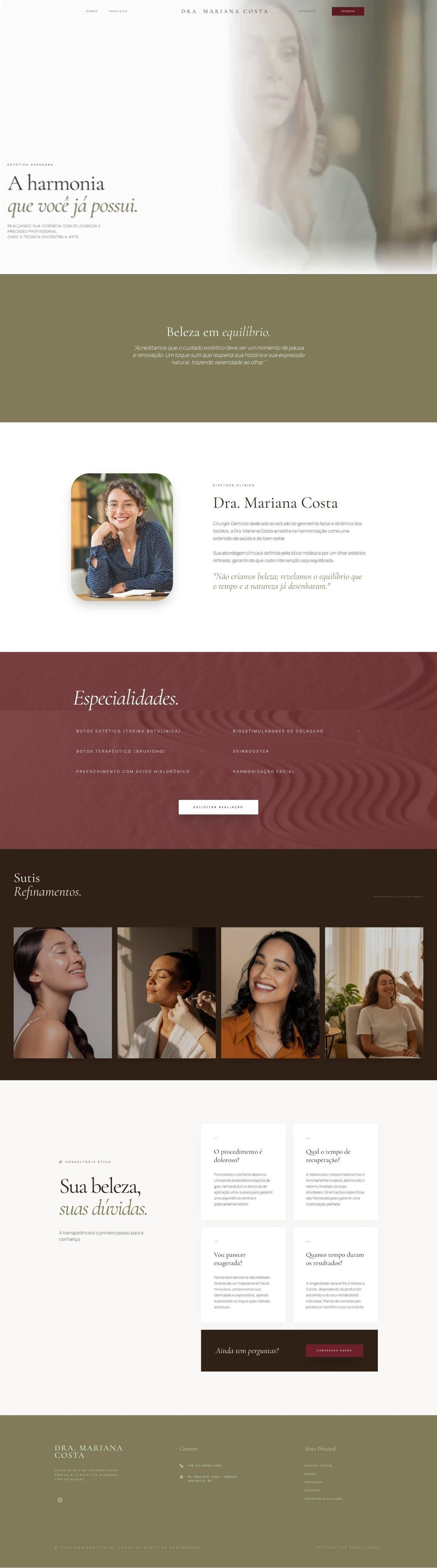
Salon digital marketing can feel like a second job. Every guide lists a dozen channels, every software company says theirs is the one that matters, and you still have clients in the chair from nine to six. Most small salon and spa owners we talk to are not short on ideas. They are short on an order to do things in.
This guide is for owners of small beauty salons, skin studios and day spas who want more bookings without posting all day. It is the plan we would follow if we ran a salon ourselves, built from what the beauty websites we design need to work.
The short answer: start with a website that shows your services, prices and a booking button, because every other channel sends people there. Then complete your Google Business Profile, ask every happy client for a review, post on one social platform with a clear next step, set up automatic reminder emails, and add local ads once the rest is in place.
1. A website that turns interest into bookings
Every channel below sends people somewhere. If that place is only an Instagram profile or a booking app, people often leave before they understand what you do best. A salon website should answer four things in the first screen: what you offer, where you are, roughly what it costs and how to book.
Group services the way clients think about them (hair color, cuts, facials, brows, massage), add durations and starting prices, show real photos of your space and your team, and put one booking button at the top of every page. If you already use booking software, the website simply links to it.
For most small salons, a one-page website is enough to start. It is fast, easy to update and tells the whole story on one scroll. Good web design for salons is mostly about this order: clear services first, booking always in reach.
2. A complete Google Business Profile
When someone searches "balayage near me" or "facial in [your town]", Google shows a map with three businesses first. Your Google Business Profile is what puts you there. SalonCentric, a professional beauty distributor, lists it first in its 12 digital must-haves for salons in 2026, and we agree with the order.
Fill in every field: categories, hours, services with prices, photos of your space and your work, and the link to your website. It takes about an afternoon, and after that you only add new photos every month or so.
3. Reviews you ask for and use well
Reviews are what people read right after they find you on the map. The simplest way to get them is to ask at the right moment: at the end of an appointment, when the client is looking in the mirror and happy. Send the review link in the same text or email that thanks her for coming.
Then put the best ones to work. Quote two or three on your website, next to the service they mention, with the client's OK and signed with her first name, like "Mariana". A review about a color correction placed on your color page does more than a wall of five stars on a page nobody opens.
Every channel in salon marketing has one job: get the right person to your booking button.
4. One social platform, with a clear next step
You do not need to be everywhere. Choose the platform where your clients already spend time, which for most salons and spas is Instagram, and post a few times a week: your work, your space, your team and short answers to questions clients ask in the chair.
End each post with one next step and keep the link in your bio pointing to your website or booking page. If you want a weekly list of what to post, we wrote esthetician social media content ideas that work for salons too.
5. Automatic emails that bring clients back
New clients cost more effort than returning ones, and most salon services are repeat services. Zenoti, a salon and spa software company, suggests three automatic messages in its guide to digital marketing for salons and spas:
- a rebooking reminder 4 to 6 weeks after a visit
- a birthday offer 7 days before the client's birthday
- a "we miss you" message to clients who have not visited in 60 days
Most booking software can send these for you. Set them up once, write them in your own voice and each one links to your booking page.
6. Local ads, once the rest is in place
Ads bring people to your salon quickly, but they work best when the place they land explains clearly who you are, what you offer and how to book. That is why they come last in this plan, not because they matter less. With a clear website, reviews and a profile people can check, every click has somewhere good to go.
Zenoti suggests starting with 5 to 10% of monthly revenue for marketing overall. Local ads on Instagram and Facebook can use part of that, aimed at people who live or work near you. When you are ready, our Meta Ads service, opening soon with a waitlist, plans and runs campaigns for beauty businesses.
After the six steps: SEO and articles
Search engine optimization, or SEO, means helping Google understand what your pages are about so they show up when people search. The basics (clear titles, page descriptions, fast loading, a mobile friendly layout) come with every Delas website.
After that, what grows your visibility is steady content: short articles on your site that answer questions like "how often should I get a gloss treatment" or "what is the difference between a facial and a peel". Articles help as long as new ones keep coming. Our Rooted SEO service, opening soon with a waitlist, writes and publishes search optimized articles on your site every day, so you get that steady flow without writing.
If you are not sure where to begin, pick the first step you do not have yet and finish it before you move on. If you already have Instagram and a booking app, your next step is the website. Once it is live, everything else on this list has a place to send people. Ask every new client how she found you, and put more time into the channels that come up most.
At Delas, Website in a Day builds a complete salon or spa site from one of our templates, live in a day. You can see beauty websites we designed in our portfolio. If you run a skin studio, our esthetician marketing ideas go deeper on loyalty and referrals.
Questions about salon digital marketing
5 to 10% of monthly revenue is the starting point Zenoti, a salon software company, suggests. For a salon making $8,000 a month, that is $400 to $800, split between tools like booking and email and, later, local ads.
4 to 6 weeks after the visit, the window Zenoti recommends for salons and spas. Match it to the service, sooner for root touch ups or brows, later for a seasonal facial.
Yes. A booking app shows times and prices, but it does not explain your specialties, your team or why your salon is different, and it rarely shows up when someone searches for a service in your town. A website does both and sends people to the same booking app.
About two weeks for the basics, if you work on it a few hours a week. The website can be live in a day, the Google profile and review request take an afternoon, and the reminder emails take one more session in your booking software.
A salon website where every channel leads to a booking.
Website in a Day, from $497 (launch offer until Dec 31, then $697).
See the options