
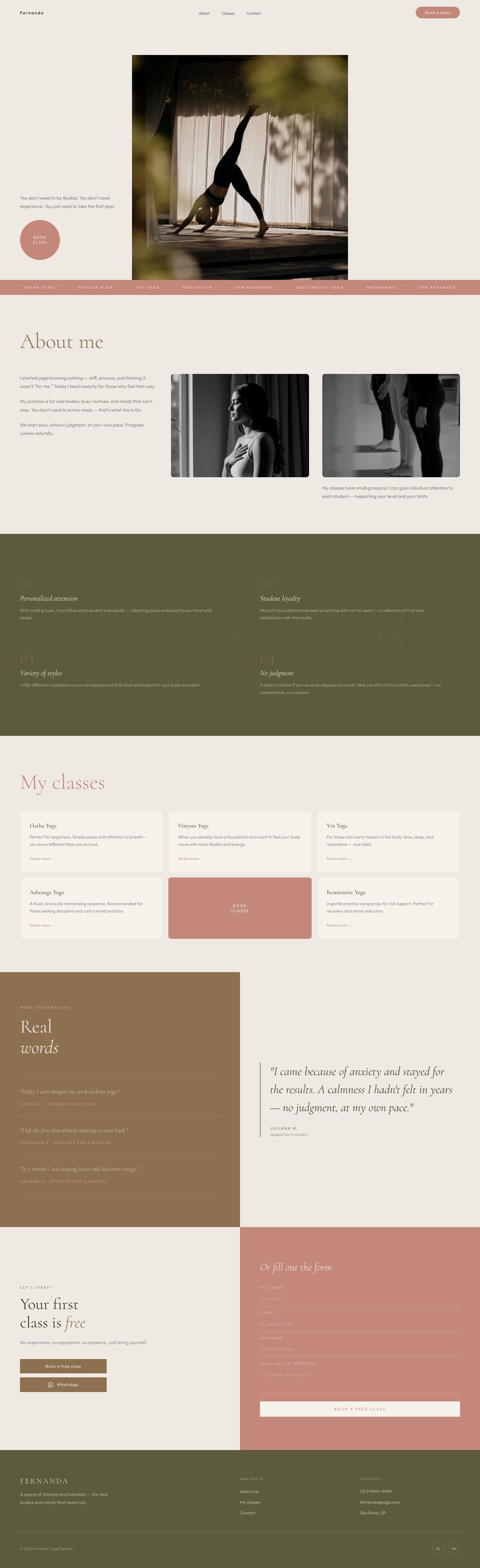
Lists of the best yoga studio websites are full of beautiful photography and calm color palettes. Look closer, though, and the sites that really work for a studio share something less visible: they make it easy for a new student to find a class, understand the price and book, all on a phone.
GlossGenius, a booking platform for wellness businesses, reviewed yoga sites it admires in its guide to the best yoga websites. The common traits it found: an up to date schedule with booking in a few clicks, prominent booking buttons, reviews, easy to find contact details, social links, clean design with good photos, simple navigation and engaging extras like class descriptions and newsletters. Here is how to borrow each idea for your own studio, plus what we add from our own yoga studio web design work.
The short answer: the best yoga studio websites put the schedule one tap away, give new students a clear first class offer, describe classes in plain words, show prices on their own page, use photos of the real space and teachers, place reviews near the intro offer and add extras like a newsletter that keep students coming back.
1. The schedule, one tap away
GlossGenius puts a visible, current schedule with easy booking first. On your homepage, add a "See the schedule" button in the first screen, and make sure the schedule shows class name, time, level and teacher. Embed it from your booking system, so it never goes out of date.
2. A clear first class offer
New students are the hardest to win and the most valuable. The best studio sites give them a clear starting point: an intro week, a first class price or a new student pack. Put it near the top with one button, and repeat it at the end of the page.
3. Class descriptions in plain words
"Vinyasa Flow 2" means nothing to a beginner. GlossGenius mentions detailed class descriptions as one of the extras that make a site useful. Write two or three sentences per class: what it feels like, who it is for, and what to bring. Add a level label, so beginners can choose with confidence. A short "your first class" section helps too: when to arrive, what to wear, whether mats are provided and what happens at the front desk.
4. Prices on their own page
Drop in, class packs, memberships and the intro offer, side by side. Students compare studios before they try one, and a clear price page answers the question they were about to send you by message.
5. Photos of your real space and teachers
Clean, modern design with good images is on the GlossGenius list, and it matters most when the images are real. Show your studio, your light, your teachers and real classes. Add a short teacher page with a photo and a few lines about each person. People choose a teacher as much as a studio.
6. Reviews and the basics in the footer
Reviews from real students, placed near the intro offer, help a beginner take the first step. GlossGenius also recommends easy to find contact details: address, phone, email and social links. Put them in the footer of every page, with a map and a note about parking or public transport.
7. Extras that keep students coming back
The best yoga studio websites go beyond booking. GlossGenius points to blogs, newsletters and shops. A newsletter sign up keeps you in touch with students between classes. Articles about your styles, your teachers and your events help you appear on Google when people search for yoga in your neighborhood, as long as new ones keep coming. If writing them is not realistic, our Rooted SEO service, opening soon, publishes them on your site for you.
A great studio website works like a warm front desk: it answers the first questions and invites people in.
How to borrow these ideas without starting over
Open your current site on your phone and try to book a beginner class as if you were new in town. Count the taps. Notice every moment you had to guess. Then fix those moments first, starting with the schedule button, the intro offer and the price page.
If you teach on your own rather than running a studio, we wrote about what a single teacher's site needs in our guide to the pilates studio website, and the same structure works for yoga. For the details that build trust, see what makes visitors trust a wellness website.
At Delas, Website in a Day builds a complete studio site from one of our templates, live in a day, and our one-page website is designed from scratch around your studio, with your schedule connected. You can see yoga websites we designed in our portfolio. Once your site is ready, our guide to yoga studio marketing shows how to fill your classes.
Questions about yoga studio websites
The schedule and the way to book. If a new student cannot find a class that fits her week and book it in a few taps, the rest of the site does not matter much.
Yes. Show your intro offer, drop in price and class packs clearly. Students compare studios, and a clear price page saves them a message.
It works for booking, but it looks the same as every other studio on that platform and does not tell your story. A website that embeds or links your schedule gives you both.
Keep the schedule live through your booking system, and check the rest every season: new teachers, new classes, new photos and current prices.
A yoga studio website that turns visitors into students.
Website in a Day, from $497 (launch offer until Dec 31, then $697).
See the options