
If you are trying to work out how to get nutrition clients, you have probably been told the answer is content: post every day, show up in Stories, film the reels. Some nutritionists love that and it works for them. Many others are seeing clients all day and have nothing left for a camera at night.
The good news is that posting is only one channel. When we looked at the guides that rank for this question, from nutrition business coaches and training schools, most of their advice had nothing to do with daily posts: a clear niche, referrals, workshops, Google, follow up. Here is that advice turned into a plan for a nutrition practice that wants steady bookings without living on social media.
The short answer: say who you help in one sentence, give every channel one website to land on, fill in your Google Business Profile, ask practitioners who see your future clients for referrals, teach one workshop instead of thirty posts, and follow up with people who already asked. The same plan works if you are looking up how to get clients as a dietitian or a nutrition coach.
1. Say who you help in one sentence
Every channel below works better when people can repeat what you do. "A nutritionist" is hard to refer. "Nutrition support for women with PCOS, online across the US" is easy. The fitness training school OriGym lists specializing as one of its main ways to get nutrition clients, with examples like vegan nutrition, pregnancy or a specific condition, because a niche helps you stand out.
Write your sentence once and use it everywhere: your website's first screen, your Google profile, your email signature and the message you send to referrers. You can widen later. Starting narrow is what makes you memorable.
2. Give every channel one place to land
Referrals, workshops, Google and the occasional post all end the same way: someone wants to know more and looks you up. That moment decides whether they book. If they land on a link page with ten buttons, or a site that does not say who you help, they leave and plan to come back later.
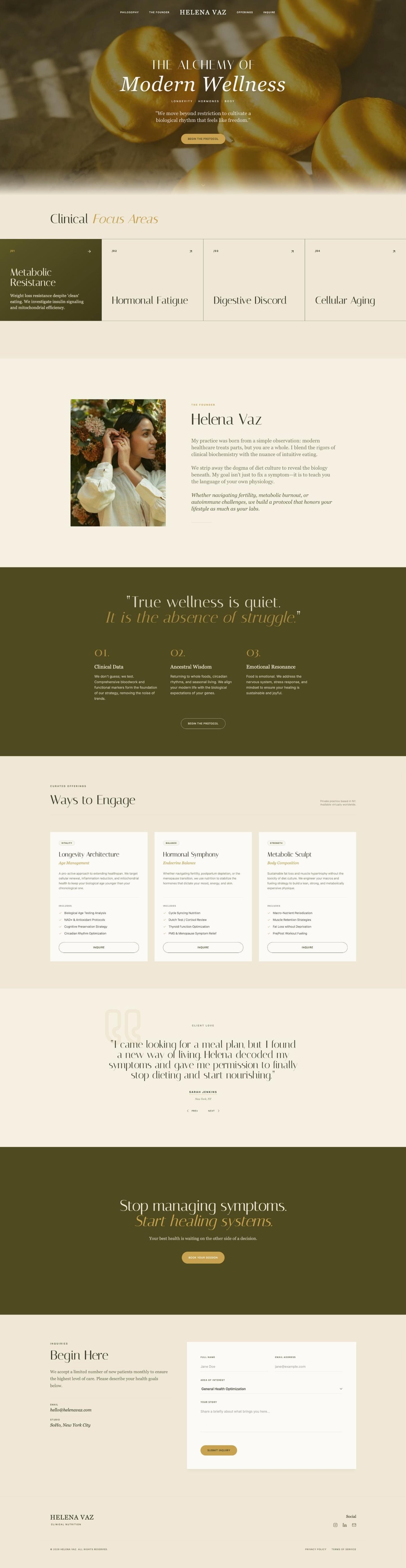
A good landing place says your one sentence, shows your programs with a starting price or how insurance works, has a warm photo of you and one clear button to book a first call. It does not need many pages. A Website in a Day site holds all of this on one page, built from one of our templates and live in a day, and it can grow into more pages when your practice does. We go through each part in our guide to a nutritionist website.
3. Set up your Google Business Profile
People who search "nutritionist near me" are already looking for help. Google's own help page on local ranking says results are based on three things: relevance, how well your profile matches the search; distance, how far you are from the person searching; and prominence, how well known you are. It adds that "businesses with complete and accurate info are more likely to show up in local search results", and that more reviews and positive ratings can help.
So fill in everything: category, hours, services, photos and your website link. Ask happy clients for a review, with their permission. If you only work online, you may not qualify for a profile with an address, and that is where your website and articles do the work instead.
4. Ask the people who already see your clients
Stephanie Long, a nutrition business coach in Canada, suggests connecting with practitioners who serve your ideal clients, such as doctors, naturopaths, chiropractors and massage therapists, and leading with how you can help them and their patients. She also suggests telling friends, family and past clients about your program and thanking them when they refer someone.
Make a short list of ten people and contact two a week. Send your one sentence and a link to your website, so they have something clear to forward. A referral keeps working whether or not you posted this week.
5. Teach once, book many
Long recommends a free or low cost workshop of 30 minutes to an hour on a topic from your niche, on Zoom or at a local venue like a health food store or community center, ending with your program and how to join. A short challenge of three to five days, with one lesson a day, works the same way.
This is one hour of showing up instead of thirty posts. Put the sign up form on your website, collect emails, and send everyone who attends the same booking link.
6. Follow up with people who already raised their hand
Many clients do not book the first time. OriGym's guide recommends contacting people who enquired to remind them to book, and sending a newsletter with useful content and testimonials. A short email once a month, with one useful idea and one reminder of how to book, keeps you in mind until the timing is right for them.
The goal is not to be everywhere. It is to make every place you are point to one clear way to book.
Where posting, articles and ads fit
Social media still has a place. Long's advice is to choose a rhythm you can keep, for example three posts a week or a few Stories a day, rather than a pace that burns you out. Use your posts to send people to your website and your workshop, and let the other channels carry the rest.
Articles on your own website keep working after you publish them, because they answer the questions your future clients type into Google. They help as long as new ones keep coming, and that steadiness is the hard part with a full calendar. It is why we are opening Rooted SEO, opening soon with a waitlist: we write and publish search friendly articles on your site every day, so your content grows without you writing it.
Paid ads on Instagram and Facebook can bring clients faster once your website explains clearly who you help and how to book. For that step, our Meta Ads service is also opening soon, with a waitlist.
What it costs with Delas
If your website is the missing piece, these are our current prices. Every site includes basic search setup, a design that works well on phones and a simple panel to change your texts and photos.
- Website in a Day: one page from one of our templates, live in a day, $497 with our launch offer until December 31, 2026 (regularly $697).
- One-Page Web Design: one page designed from scratch around your practice, $997 with the launch offer (regularly $1,297).
- Multi-Page Web Design: separate pages for your programs, about and booking, $1,697 with the launch offer (regularly $1,897).
For a longer view of the channels above, read our dietitian marketing guide, or see nutrition websites we designed in our portfolio.
Questions about getting nutrition clients
Referrals. Your own network and practitioners who already see the people you help usually bring the first clients: send them your one sentence and a page where people can book.
No. Instagram helps if you enjoy it and keep a pace you can sustain, such as three posts a week, but a website, Google and referrals can fill a practice without it.
Yes, a few and only for a set time, such as three free 60 minute sessions in January, which is Stephanie Long's example. She suggests it as a last resort and to ask for a testimonial and referrals afterwards.
15 to 20 minutes: enough to hear what she needs and explain how you work, short enough to offer several a week. Write the length on your website so people know what they are booking.
A nutrition website that every channel can point to.
Website in a Day, from $497 (launch offer until Dec 31, then $697).
See the options