
Most about me page examples follow the same pattern: a long life story, a list of certifications and a paragraph that ends with "I am passionate about helping people." It is all true, and almost none of it helps a visitor decide whether to book.
For a wellness practitioner, the about page has a specific job. People usually read it right after the homepage, when they are already interested and checking one last thing: can I trust this person with something personal? Salesforce's guide to small business about pages makes the same point, and adds that the page should focus on what you do for your clients, show the people behind the business and end with a clear next step.
Here is the structure we use for every about page we write, with short examples for different practices.
Start with the person you help
Open with your client, not your biography. One or two sentences that show you understand what brings people to you.
Nutrition: "You have tried every plan, and you are tired of feeling like you failed them. I help women build a way of eating they can actually keep, without counting every bite."
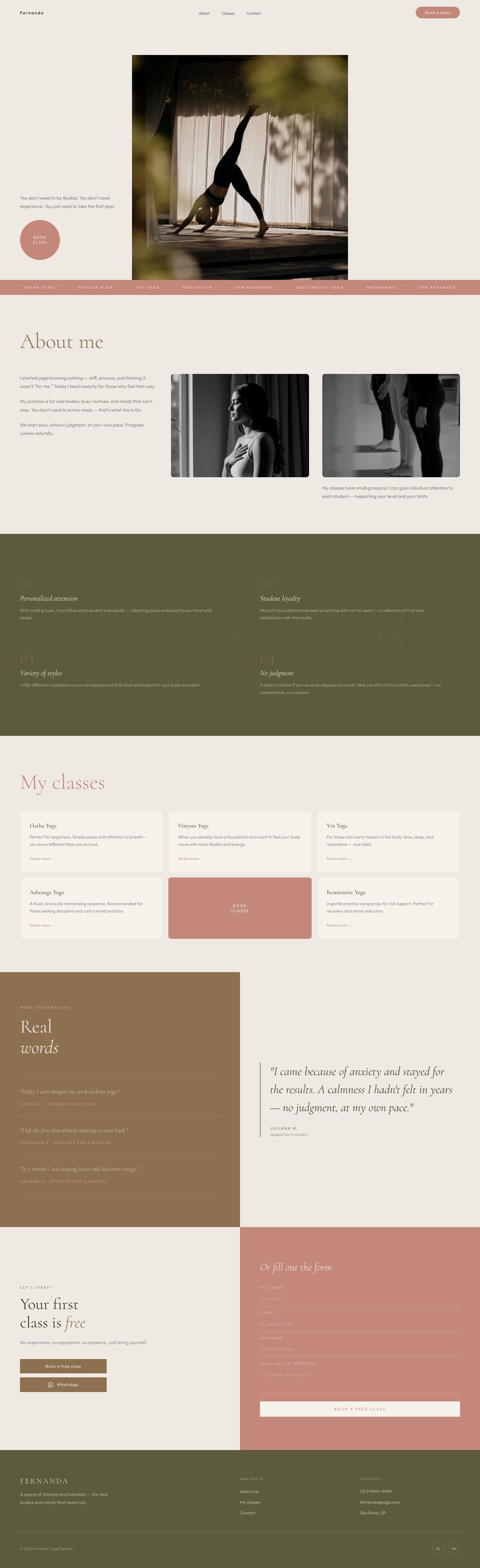
Yoga: "Maybe you have never felt flexible enough for yoga. My classes are slow, steady and made for real bodies, including stiff ones."
Notice what these do: the right reader recognizes herself before she knows anything about you. That is what keeps her reading.
Then your story, briefly
Now tell why you do this work. Keep it short, two or three sentences, and choose the part of your story that connects to your clients. Salesforce suggests a short story that covers what you do, what makes you different and why it matters to the people you serve.
Aesthetics: "I became an esthetician after years of struggling with my own skin, and of feeling rushed through treatments that never explained anything. In my studio, every treatment starts with time to talk."
The goal is connection, not a timeline of your career.
Your approach, in plain words
Describe what working with you is actually like: the first session, the pace, the format, online or in person. Explain any technique in one plain sentence. Most visitors do not know the names of methods, and they do not need to.
Therapy: "Our sessions are calm and practical. We look at what keeps you stuck, and you leave each week with something small to try."
This section answers the quiet fear of the unknown that stops many people from booking a first appointment.
Credentials and proof
Now add your training, certifications, years of practice and any memberships. Salesforce recommends testimonials as a way to build trust, with real names where possible. If your professional rules allow testimonials, add one or two short ones about the experience of working with you. Therapists should check their ethics code first, since many codes restrict asking clients for testimonials.
Keep the list focused. Three credentials that matter to your clients say more than fifteen that matter to colleagues.
A real photo and one human detail
People want to see who they will meet. Salesforce lists putting a face to the name as its first tip, and for a wellness practice it matters even more. Use a warm, recent photo in natural light, ideally in your space.
Then add one small personal detail: a hobby, a favorite ritual, where you are from. One sentence is enough to make you feel like a person, not a profile.
The best about pages feel like the first five minutes of a first session: warm, clear and about the person reading.
End with an invitation
Close with one clear next step: book a free call, book a first class, see the treatments. Salesforce suggests two or three calls to action on an about page. For a small practice, one main button plus one softer option, like following you on Instagram, is usually enough. Use the same button wording you use on the rest of your site.
Common mistakes
- Opening with credentials. Keep them, just not first.
- A wall of text. Short paragraphs, generous spacing, readable on a phone.
- No photo, or an old one. It is the first thing many visitors look for.
- No next step. An about page without a button leaves people unsure what to do.
If you are a therapist, our guide to therapist bio examples goes deeper into writing for clients, and we wrote about the details that make visitors trust a practice in what makes visitors trust a wellness website. If you would like help turning your story into a page that books, our Website in a Day builds a full site from one of our templates, and a one-page website is designed from scratch around you. See examples in our portfolio.
Questions about the about page
Long enough to build trust, short enough to read on a phone. For most practitioners, four to six short paragraphs with a photo and one button is plenty.
First person usually feels warmer on your own site, because it sounds like you talking. Third person suits press bios and directory listings.
After the opening about your client and your approach. Credentials answer "are you qualified?", which matters, but the first lines should answer "are you right for me?"
Yes, if your professional rules allow them. Therapists should check their ethics code first, since many codes restrict testimonials from clients.
An about page that sounds like you, on a site built to book.
Website in a Day, from $497 (launch offer until Dec 31, then $697).
See the options