
Instagram for therapists is often sold as a second job: post every day, film Reels, answer every message at night. After a full day of sessions, that plan lasts about three weeks. Then the account goes quiet, and the guilt starts.
We design websites for therapists, and we see the accounts that keep working. They are rarely the busiest ones. They are the ones set up so that most of the work happens once, and the rest fits into an hour a week.
This guide is about that setup. If you want to know which platform to choose and what kinds of posts to write, our guide to social media marketing for therapists covers it. Here we focus on how to keep Instagram going without it taking over your evenings.
The short answer: set up your profile once so it works while you are in session (a clear bio, a link to your website, three pinned posts and a few highlights). Then batch your posts once a month, schedule them inside Instagram, and give messages 10 minutes a day with saved replies that send people to your website. That is about an hour a week, and it is enough.
Set up the profile once, so it works while you are in session
Many people who find you on Instagram decide from the top of your profile alone. That space can do most of your Instagram marketing for therapists while you are with clients, if you set it up well one time.
- Bio. Who you help, where you are licensed, and one line that says your posts are educational and not therapy. Plain words, the way your clients would say it.
- Links. Instagram lets you add up to five links to your profile, a change TechCrunch reported in April 2023. Put your website's booking page first. You do not need a separate link page when your site already explains everything.
- Pinned posts. You can pin up to three posts or Reels to the top of your grid, as Instagram announced in 2022. These three do the work of your best posts forever, so choose them on purpose: who you help, what a first session is like, and how to book.
- Highlights. Story highlights sit under your bio and never expire. Three are enough: "About me", "How it works" (fees, insurance, online or in person) and "Book".
Once this is done, a new visitor can understand who you are and how to reach you even if you have not posted in two weeks.
Batch a month of posts in one sitting
The daily "what do I post today" question is what wears people out. Take it away by deciding once a month.
Block two hours on your calendar, the same day each month. Write eight posts, two for each week. Reuse your four or five best topics in new words instead of hunting for new ones: the questions clients ask you in first sessions are the topics people search for too.
Then schedule them. Professional accounts can schedule posts and Reels inside the Instagram app, as Instagram's Help Center explains, so you do not need another tool or another subscription. When the month starts, your account runs by itself.
A calm account that posts twice a week for a year beats a busy one that posts every day for a month.
Give messages 10 minutes, with a clear boundary
Direct messages are where Instagram can quietly turn into unpaid evening work, and where boundaries matter most for a therapist. Someone writes a long message about what they are going through, and it feels wrong not to answer in detail.
The kind answer is a short one that points to the right place. Instagram lets you save replies you use often, according to its Help Center. Write two or three:
- For people who want to work with you: "Thank you for reaching out. The best next step is a free 15 minute call, which you can book here: [your booking page]."
- For people sharing something personal: "Thank you for trusting me with this. I can't offer support through messages, but you can book a call here: [your booking page]. If you are in crisis, call or text 988."
- For questions about fees or insurance: a one line answer and the link to the page on your site that explains it.
Answer once a day, in a 10 minute window, and turn off message notifications on your phone outside it. Therapist Whitney Goodman put the reason in the title of her 2019 Psychology Today post: Instagram is not therapy. Your saved replies keep it that way, kindly.
Measure two numbers once a month
Likes and follower counts are the numbers that make Instagram feel like a performance. They are not the ones that bring clients. In your professional dashboard, look at two numbers once a month, right after you schedule the next batch:
- Profile visits. How many people came to look at you after seeing a post.
- Link taps. How many of them tapped through to your website.
If profile visits go up but link taps do not, your bio or pinned posts are not giving people a clear next step. If both go up but bookings do not, the problem is on your website, not on Instagram. That is the real point of this check: it tells you where to fix things instead of posting more.
Let your website carry the weight
This is how to use Instagram for private practice without burning out: let Instagram start the conversation and let your website finish it. A post can make someone curious. Only your site can answer everything she needs to decide: who you help, how you work, fees, insurance, and a simple way to book that never asks for health details.
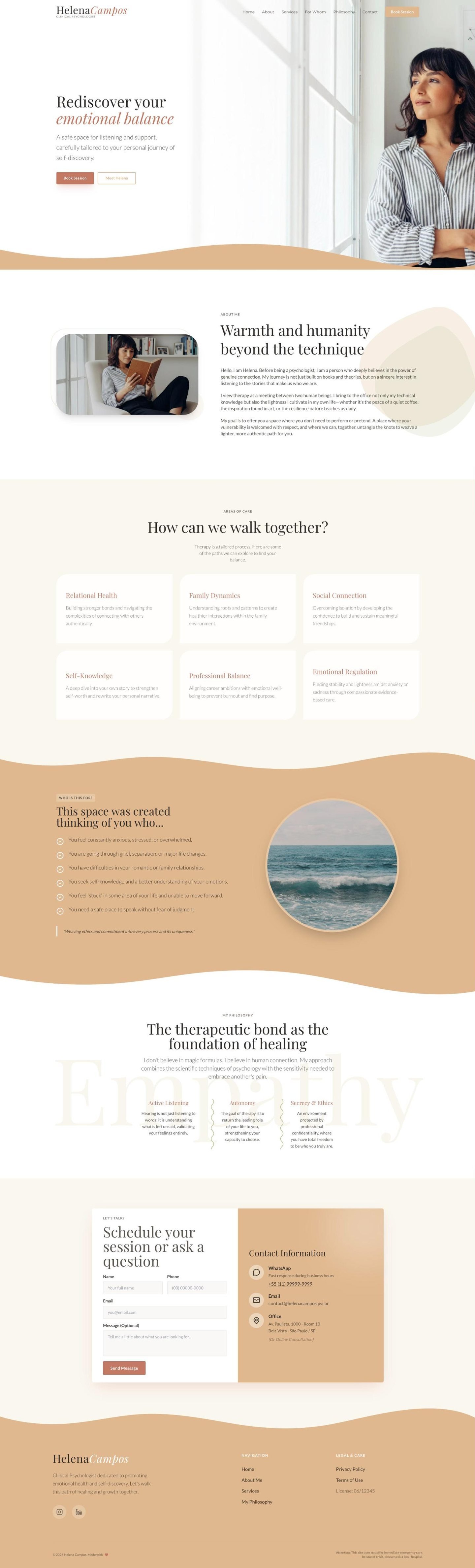
When the website does that well, Instagram only has to do one small job, and you can post less. For most solo therapists, a one-page website is enough. We walk through what it should include in our guide to what to include on a therapist website.
Reviews help here too. What the APA code rules out is asking current clients for testimonials. Reviews clients leave on their own, on Google for example, are yours to share: quote one on your website or in a pinned post with her OK, signed with a first name, like "Mariana".
When you want more reach without more posting, two things help. Articles on your website keep bringing visitors from Google for months, as long as new ones keep coming, and our Rooted SEO service, opening soon with a waitlist, writes and publishes them for you. Ads on Instagram and Facebook bring people faster once your website explains clearly who you help; our Meta Ads service, also opening soon, runs them for you, always within your code of ethics.
If you want us to look at your profile and website together, contact us.
Questions therapists ask about Instagram
About one hour. Count two hours once a month to write and schedule eight posts, plus 10 minutes on weekdays for comments and messages, and stop there.
A professional account, kept separate from your personal one. Professional accounts can schedule posts and see how many people tap your link, and your personal life stays private.
Three posts. One that says who you help, one that explains what a first session is like, and one that tells people how to book a call through your website.
Yes. Schedule a month of posts before you leave, pin a post that says when you are back, and set a saved reply that points people to your website, which keeps taking bookings while you are away.
A website that does the explaining, so your Instagram does not have to.
One-Page Web Design, from $997 (launch offer until Dec 31, then $1,297).
See the options