
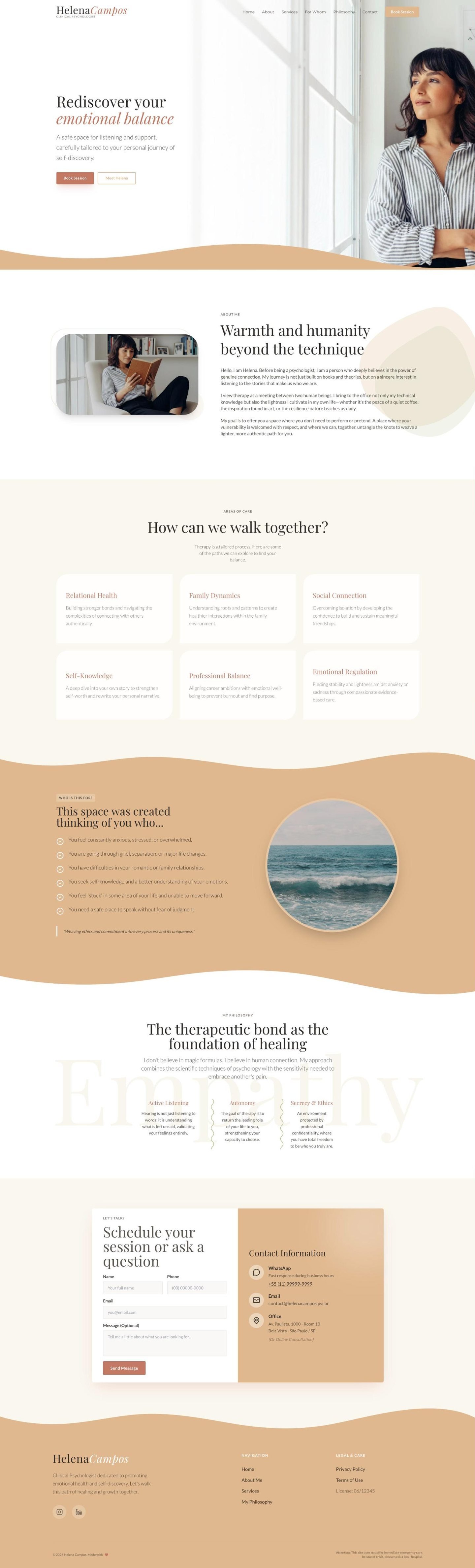
Social media marketing for therapists has a strange reputation. Some guides make it sound like the only way to fill a practice, others make it sound like an ethics trap. If you are a therapist with a full day of sessions, both versions are tiring, and neither tells you what to actually post on Monday.
We see it from the other side. When a new client reaches out to one of the practices we design for, social media is often where she first heard the name, and the website is where she decided to write. So the job of your posts is not to do therapy in public. It is to help the right person recognize you and take one small step toward your site.
Here is how we suggest the therapists we work with use it, and what we tell them to skip.
The short answer: pick one platform where your future clients already are, set up a profile that points to your website, and post two times a week using four kinds of posts. Skip anything that could identify a client, diagnose anyone or blur the line between your personal and professional life. Then let your website answer questions and take bookings, so followers can become clients.
Pick one platform, not five
Most therapy guides list every network. In practice, one account kept well beats five accounts kept badly, and choosing is easier when you start from who you help.
- Instagram suits most solo therapists who see individual adults. Short posts and videos let people hear how you talk before they ever meet you.
- LinkedIn suits therapists who want referrals from doctors, psychiatrists, HR teams and other clinicians. Headway's guide for therapists recommends it for exactly that.
- Facebook suits therapists who work with parents or families in one town, where local groups still matter.
TikTok and YouTube can work too, if you already like making videos. If you do not, they are not required.
Set up a profile that points to your website
Your profile is read in about the time it takes to scroll past it, so it needs three things. First, who you help and where you are licensed, in your client's words, not clinical terms. Second, one line that says the account is educational and not therapy, with a crisis line. Third, a link to your website, ideally to the page where people book a first call.
Use the same photo, name and one sentence about who you help on every profile and on your site. When someone moves from your post to your website, it should feel like the same person, not a different brand.
Your posts help people recognize you. Your website is where they decide to reach out.
Post four kinds of things
You do not need to invent new ideas every week. Most good therapist social media comes from four kinds of posts, used in rotation.
- Explain one thing. A common worry your clients bring, put in plain words, with one idea they can take away. Education is fine, advice to one person is not.
- Show how you work. What a first session is like, how long sessions last, whether you see people online or in person, how fees or insurance work. These posts answer the questions that stop people from writing to you.
- Let them meet you. Your face, your voice, your office or the light in your room. People choose a therapist they feel safe with, and that starts with seeing you.
- Help the people who refer. A short post for doctors, teachers or other therapists about who you help and when to send someone your way.
Two posts a week is enough. Write them in one sitting each month, schedule them, and spend a few minutes a day replying to comments in general terms.
Skip what crosses ethics lines
This is where social media for therapists differs from any other business. For counselors, the ACA Code of Ethics (2014) gives clear rules, and the ACA's own "Social Media Do's and Don'ts" tip sheet sums them up:
- Keep personal and professional accounts separate (standard H.6.a). Your political views and family photos stay on a private personal account.
- Never share confidential information, even in closed or private groups (H.6.d). That includes client stories with the names changed.
- Do not look at a client's social media without her consent, even when it is public (H.6.c).
- Do not diagnose anyone in a post, including public figures, and do not form personal online relationships with current clients.
Even if your license is not a counseling one, these are good lines to keep. Also keep in mind that a regular inbox is not built for health information, as Headway's guide points out, so do not ask people to describe their situation in direct messages. Invite them to book a call through your website instead.
Reviews are not on this list. Use them the right way. What the APA code rules out is asking current clients for testimonials. Reviews that clients leave on their own, on Google for example, are yours to share: quote one on your website or in a post with her OK, signed with a first name, like "Mariana".
Turn followers into booked consultations
A follower is not a client yet. The step between the two almost always happens on your website, so every post should have a quiet next step: "If this sounds like you, you can book a free 15 minute call through the link in my bio."
That only works if the page behind the link answers the rest: who you help, how you work, fees or insurance, and a simple form or booking button that does not ask for health details. For most solo therapists, a one-page website is enough to do that well, and we walk through each part in our guide to what to include on a therapist website.
When you want more reach
Two things grow what you already built. The first is turning your best posts into articles on your website. A post fades in a few days, while an article keeps showing up on Google for months, as long as new ones keep coming. If you would rather not write them yourself, our Rooted SEO service, opening soon with a waitlist, writes and publishes them on your site for you.
The second is ads. Paid posts on Instagram and Facebook can bring people faster, and they work best once your website explains clearly who you help. When you are ready, our Meta Ads service, also opening soon, runs them for you, always within your code of ethics.
Social media is one piece of a bigger picture. If you want to see where it fits next to directories, local search and referrals, read our guide to marketing for therapists, or contact us and we will look at your profile and website together.
Questions therapists ask about social media
Two posts a week is a good target for a solo practice. It takes about two hours a month if you write all eight posts in one sitting, and it is easy to keep up for a year.
Instagram, for most solo therapists who see individual adults. Choose LinkedIn instead if you want referrals from doctors and other clinicians, and Facebook if you work with parents in one town.
Three lines. Who you help and where you are licensed, "Educational content, not therapy. In crisis, call or text 988," and a link to the page on your website where people book a first call.
Leave it without a personal reply. Answering in a way that shows she is your client breaks her confidentiality, so either say nothing or keep any reply general, the same one you would give anyone.
A website that turns your followers into booked consultations.
One-Page Web Design, from $997 (launch offer until Dec 31, then $1,297).
See the options