
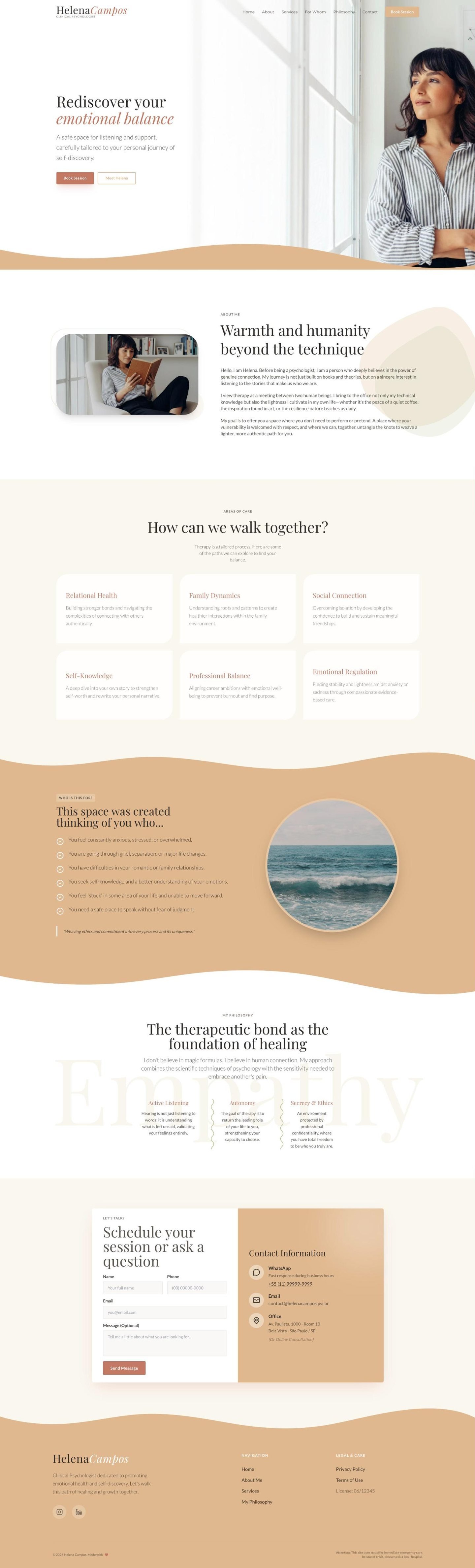
SEO for therapists is often explained as if you were running an online store: backlinks, keyword density, technical audits. For a private practice, most of that is noise. What matters is simpler. When someone in your area searches for the kind of help you offer, Google should understand that your practice is a good answer, and your site should make it easy for that person to reach out.
SEO stands for search engine optimization, which just means helping search engines understand and show your site. Here is how that works for a therapy practice, step by step, in plain words.
Understand how Google picks local results
When someone searches "therapist near me" or "anxiety therapist" plus a city, Google shows a map with a few practices, then the regular results. In its help pages for business owners, Google says local results are based mainly on three things: relevance, distance and prominence, which it also calls popularity.
Relevance is how well your profile and site match the search. Distance is how far you are from the person searching. Prominence is how well known your practice is, based in part on links from other websites and on reviews. Google also says there is no way to request or pay for a better local ranking. So the work is about being clear and complete, not about tricks.
Claim and complete your Google Business Profile
Your Google Business Profile is the free listing that appears on Google Maps and in local results. Google says complete, accurate profiles are more likely to show up, and that verification tells Google you are allowed to represent the business.
Fill in everything that applies: your practice name, category, phone, website, hours and a short description in the words your clients use. If you see clients only online or from a home office, show a service area instead of your address. Add a few real photos of your office or of you. And keep your hours current, including holidays.
Give each specialty its own page
This is the step most therapist websites skip, and often the one that makes the biggest difference. A single services page listing ten specialties gives Google little to work with. A page for each main specialty, such as anxiety, couples therapy or postpartum support, tells Google exactly what you offer and gives the right visitor a page that speaks to them.
Each page should say who it is for, what usually brings people in, how you work with it, whether you see clients online or in person, and how to book. Write in your clients' words, not clinical terms. People search for "help with panic attacks" far more naturally than for a treatment name.
Write clear titles and descriptions
Every page has a title and a short description that Google often shows in its results. OT Potential's guide to SEO for therapists suggests keeping titles under 60 characters and descriptions around 150 to 160 characters. In practice, that means something like "Anxiety Therapy in Austin | Jane Rivera Counseling" as the title, and one honest sentence about who you help as the description.
Use the same idea for headings on the page. A heading like "Therapy for anxiety in Austin" helps Google and visitors more than a heading like "How I can help".
Keep your details identical everywhere
Your practice name, address or service area, and phone number should be written the same way on your website, your Google profile and every directory you use. Different versions, an old phone number on one site or a suite number missing on another, make it harder for Google to be sure all those listings belong to the same practice.
Make a short list of every place your practice appears online and check it once a year. It takes an hour and fixes problems you would never notice otherwise.
Make the site fast, mobile friendly and easy to book
SEO brings visitors, but the website decides whether they contact you. Most people searching for a therapist do it on a phone. Your site should load quickly, be easy to read without zooming, and have one clear button to book a consultation or get in touch.
A slow, confusing site wastes the work you did to be found. We wrote more about this in what makes visitors trust a wellness website. It also matters for Google, which wants to send people to pages that serve them well. Every Delas site includes this basic search setup: clear titles and descriptions, a structure Google can read, and a design that works well on phones.
Good SEO for a practice is mostly clarity. Say what you do, for whom and where, the same way, everywhere.
Be careful with reviews
Reviews help with prominence, and OT Potential's guide cites a Rater8 report saying 84% of patients check online reviews before booking care. But for therapists, reviews need more care than for most businesses. The APA Ethics Code says psychologists do not solicit testimonials from current therapy clients or others vulnerable to undue influence, and many other codes are similar. Check your own code before asking anyone.
If reviews appear on their own, you can reply, but never confirm that the person is your client or mention anything about their care. A short, general thank you is enough.
What you can leave for later
Backlink campaigns, paid SEO tools and weekly blog posts can wait. Once your profile is complete, your specialty pages are clear and your details match everywhere, you have done most of what a solo practice needs. A multi-page website gives each specialty its own page from the start, and you can see how we design for therapists in our portfolio. If you are not sure your current site is set up well, contact us.
Questions therapists ask about SEO
Usually months, not weeks. A new page can be found in days, but showing up well for competitive searches in your city takes steady work and patience.
Not to start. A clear website, a complete Google Business Profile and consistent details everywhere cover the basics for most solo practices. Paid help makes more sense once those are in place.
Check your code of ethics first. The APA Ethics Code says psychologists do not solicit testimonials from current therapy clients, and many counseling and social work codes are similar, so many therapists rely on other trust signals.
No. It can help over time if you write about the questions your clients ask, but clear specialty pages matter more, and an abandoned blog does not help.
A website built so Google understands what you do.
Every Delas site includes basic search setup.
See the options